
Insulated vs. Non-Insulated Work Gloves: Which Should You Choose?
Finding a good pair of leather work gloves is one thing. Finding a pair that works year-round is another.
If you've ever worked through a freezing winter morning with ordinary leather gloves, you know they can leave your fingers feeling cold.
But if you've ever worn thick insulated gloves on a warm afternoon, you also know how uncomfortable unnecessary insulation can become.
This raises a common question:
Are insulated or non-insulated work gloves better?
The answer depends on your working conditions, activity, and how much warmth you need.
At Digits Workwear, we offer two cowhide leather glove families designed around this exact decision.
Our Spectre is a non-insulated leather work glove designed for durability, dexterity, and general-purpose work.
Our Frostline is the insulated counterpart, designed to provide added warmth for colder conditions while maintaining a flexible, work-oriented construction.
Let's compare the differences and help you decide which glove belongs in your toolbox.

What's the Difference Between Insulated and Non-Insulated Work Gloves?
The primary difference between insulated and non-insulated work gloves is the additional thermal material inside insulated gloves, which helps reduce heat loss in cold conditions.
Both types can provide a protective barrier against ordinary surface contact, depending on their construction.
However, they prioritize comfort in different environments.
Insulated work gloves are designed to help keep hands warmer in cold conditions.
Non-insulated gloves generally provide less thermal protection but can feel lighter and more comfortable during warm-weather or high-activity work.
Neither is automatically better.
The correct choice depends on the environment and the job.
Insulated vs. Non-Insulated Leather Gloves: Comparison
| Feature | Insulated leather gloves | Non-insulated leather gloves |
|---|---|---|
| Primary purpose | Cold-weather work | General-purpose and warmer-weather work |
| Warmth | Additional thermal insulation | Limited thermal insulation |
| Dexterity | Varies by design and insulation | Often less bulk |
| Breathability | Depends on materials and construction | Generally less insulating material |
| Cold morning comfort | Can provide additional warmth | May feel cold without insulation |
| Warm-weather comfort | May become too warm | Often more comfortable |
| Typical applications | Winter construction, ranch work, outdoor chores | Construction, shop work, maintenance, everyday handling |
| Digits Workwear option | Frostline | Spectre |
These are general differences. Actual performance depends on the specific glove, fit, working conditions, and duration of exposure.
When Should You Wear Insulated Work Gloves?
Insulated work gloves are worth considering when cold temperatures begin affecting comfort or your ability to handle tools and materials.
Working Outside in Winter
If you work outdoors throughout winter, insulation can help reduce heat loss.
Cold air, wind, and repeated exposure to cold surfaces can make ordinary uninsulated gloves uncomfortable.
Early-Morning Construction
Construction jobs often begin before sunrise, when temperatures can be substantially colder than later in the day.
An insulated glove may be more comfortable during these early hours.
Farm and Ranch Chores
Feeding animals, handling equipment, moving supplies, and repairing fencing can all require work in cold conditions.
Insulated gloves can add warmth during routine outdoor tasks.
Firewood and Property Maintenance
Stacking firewood, moving logs, and handling yard equipment during winter involves repeated contact with cold materials.
Insulation can help improve comfort while working outdoors.
Cold-Weather Mechanical Work
General maintenance and equipment handling may require both warmth and finger movement.
A flexible insulated glove can be useful for suitable tasks, provided it doesn't create an entanglement hazard and offers the necessary protection.
When Are Non-Insulated Work Gloves Better?
Insulation isn't always necessary.
In fact, there are many situations where a non-insulated glove makes more sense.
Warm-Weather Construction
During summer or warm afternoons, insulated gloves may become uncomfortable.
Non-insulated gloves can provide a durable handling surface without adding unnecessary thermal material.
Indoor Shop Work
Fabrication shops, workshops, and garages are often warmer than outdoor environments.
When cold exposure isn't a significant concern, non-insulated gloves can be a more practical choice.
High-Activity Tasks
Workers generating substantial body heat through physical activity may find insulated gloves too warm.
A non-insulated glove can offer a more comfortable balance, depending on the task.
Precision-Oriented Work
Some non-insulated glove designs provide a thinner, closer feel around the fingers.
This can make detailed handling easier, especially when added warmth isn't needed.
However, dexterity still depends on the exact glove design rather than insulation alone.

Frostline vs. Spectre: Two Leather Work Gloves for Different Conditions
At Digits Workwear, we designed Frostline and Spectre around a common philosophy.
Work gloves should provide durability without unnecessarily limiting your ability to use your hands.
The biggest difference is how the two styles address temperature.
Frostline: Our Insulated Leather Work Glove
Frostline is designed for cold-weather conditions.
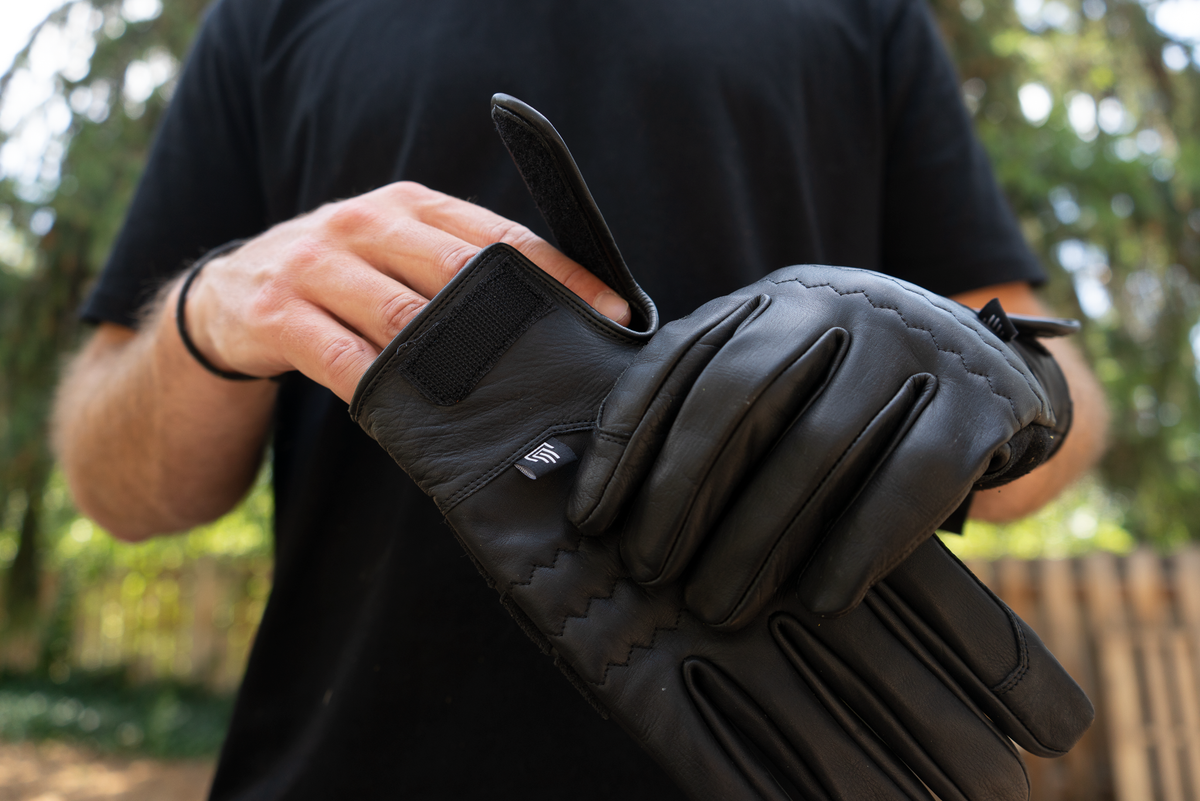
It uses premium cowhide leather, an insulating interior, reinforced seams, precise finger stitching, extended cuffs, and an adjustable Velcro wrist closure.
The design is intended to help workers maintain hand mobility while adding warmth for colder jobs.
Frostline is available in tan and black, with sizes Small through XXL.
Best suited for: General-purpose outdoor work in colder conditions, including construction, property maintenance, ranch chores, and routine material handling.
Spectre: Our Non-Insulated Leather Work Glove
Spectre is designed for general-purpose work where additional winter insulation isn't necessary.
It uses premium cowhide leather with a focus on flexibility, durability, and comfortable hand movement.
Spectre also features extended cuffs, an adjustable Velcro closure, and precise finger construction.
Because it doesn't include the additional insulation found in Frostline, it may be better suited to warm-weather tasks or indoor jobs.
Best suited for: Construction, maintenance, shop work, and other general-purpose tasks in conditions where insulation isn't needed.
Does Insulation Reduce Dexterity?
It can, depending on the glove.
Adding insulation introduces additional material between your hand and the outside of the glove.
In some designs, this can reduce tactile feedback and make small movements more difficult.
However, not all insulated gloves are bulky.
The leather construction, stitching, insulation, and fit all influence how naturally your fingers move.
Frostline uses the same overall design approach as Spectre, with insulation added for cold-weather use.
Its precise finger stitching and flexible cowhide construction are intended to help preserve control during everyday tasks.
If you work with small hardware, it's especially important to choose a glove that fits correctly and allows natural finger movement.
Should Insulated Gloves Fit Tighter or Looser?
Fit matters for both comfort and grip.
A glove that is too tight can restrict movement and compress insulation.
A glove that is too loose can create excess material around your fingertips, making tools and hardware harder to handle.
Insulated gloves need enough room for the insulating material and comfortable finger movement.
Because Frostline includes insulation, its fit may feel different from the non-insulated Spectre, even when choosing the same labeled size.
When purchasing Frostline, use the current Digits Workwear size guide rather than assuming your usual size will always provide the same fit.
If your measurement falls between sizes, the larger size may be more comfortable.
However, avoid excessive looseness that could interfere with tool control.
Do You Need Both Insulated and Non-Insulated Gloves?
For many people who work outdoors year-round, owning both types makes sense.
Consider a construction worker in a region with hot summers and cold winters.
A non-insulated glove may be comfortable throughout most of the warmer months.
But when winter arrives, additional insulation can make outdoor work more manageable.
The same applies to ranchers, property owners, mechanics, and outdoor workers.
Instead of expecting one glove to perform equally well in every temperature, having separate gloves for different seasons allows you to choose based on the conditions.
This is why Frostline and Spectre complement each other.
They provide familiar construction features while serving different seasonal needs.
Are Insulated Leather Work Gloves Waterproof?
Insulation and waterproofing are two different features.
Insulation is intended to reduce heat loss.
Waterproofing is intended to prevent water from reaching the inside of a glove.
A glove can be insulated without being waterproof.
Likewise, a waterproof glove can have little or no thermal insulation.
Neither Frostline nor Spectre should be assumed to provide fully waterproof protection.
For prolonged exposure to rain, wet snow, or standing water, look for gloves with appropriate waterproof performance.
Leather-compatible water-repellent treatments can help reduce moisture absorption but don't necessarily make the finished glove waterproof.

Frequently Asked Questions About Insulated vs. Non-Insulated Gloves
Are insulated work gloves better for winter?
Insulated gloves generally offer better thermal protection than comparable uninsulated gloves in cold conditions. However, the amount of warmth depends on construction, fit, moisture, wind, and activity level.
Can you wear insulated work gloves year-round?
You can wear them whenever conditions make them comfortable and suitable, but insulated gloves may become too warm during hot weather or demanding physical activity.
Are non-insulated gloves better for dexterity?
They often have less bulk, which can improve tactile feel. However, dexterity depends on the complete glove design, including materials, stitching, and fit.
What is the difference between Frostline and Spectre?
Frostline is the insulated version of Digits Workwear's cowhide leather glove design, while Spectre is non-insulated. Both prioritize durable leather construction, flexible movement, and secure wrist closures.
Should I size up when buying insulated gloves?
If you're between sizes, sizing up may provide a more comfortable fit. Always use the manufacturer's size chart and ensure the finished fit allows comfortable, secure handling.
Are insulated leather gloves good for outdoor work?
Yes, insulated leather gloves can be useful for many general-purpose outdoor jobs in cold conditions. Their suitability depends on the specific hazards and whether additional protection, such as waterproofing or certified cut resistance, is required.

The Right Gloves for the Right Conditions
Insulated and non-insulated gloves serve different purposes, and knowing when to use each can make a difference in comfort and usability.
When you're working in cold conditions and need additional warmth, an insulated glove like Frostline may be the better choice.
When temperatures are warmer or you're working indoors, a non-insulated glove like Spectre may offer a more comfortable option.
Both are built around the same priorities: premium cowhide leather, durability, dexterity, and practical everyday use.
Because good work gloves aren't about having the most features.
They're about having the right features for the job.
PROTECT YOUR DIGITS.
Best Insulated Leather Work Gloves for Winter: The Complete Guide
Best Winter Work Gloves for Construction, Ranch Work & Outdoor Jobs