
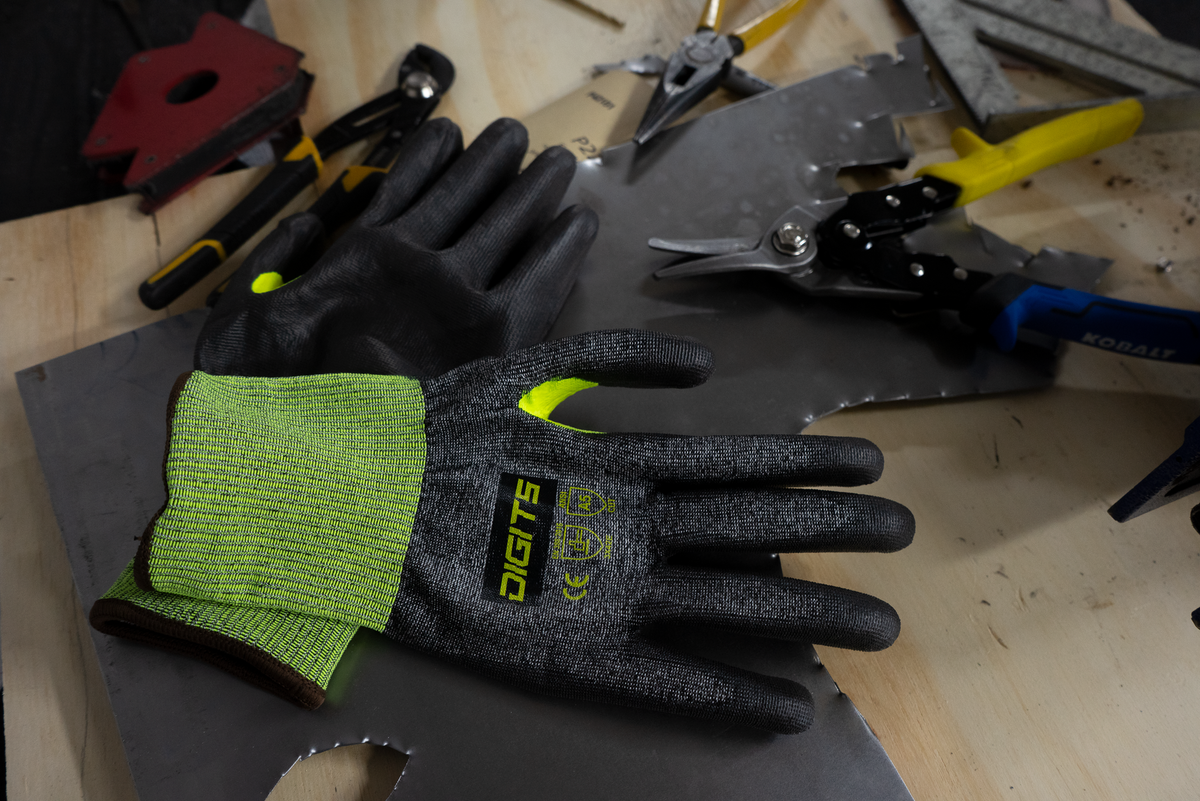
Anyone who's spent time in a metal fabrication shop knows that metal isn't particularly forgiving.
Freshly cut sheet metal, sharp corners, burrs, and unfinished edges can turn an ordinary handling task into a serious hand hazard.
Whether you're building brackets, installing ductwork, assembling fabricated parts, or moving material around the shop, your hands are involved in nearly every step.
And while work gloves are essential for many fabrication tasks, not every glove is suitable for every part of the job.
Some provide cut resistance but limit dexterity. Others offer excellent grip but very little protection from sharp edges. Traditional leather gloves can be appropriate for certain heavy-duty and hot-work applications, while lightweight dipped gloves can be better suited to precision handling.
The best work gloves for metal fabrication are gloves with a tested cut-resistance level appropriate to the materials being handled, a secure grip, and enough dexterity to perform the task safely.
At Digits Workwear, we understand the importance of being able to work with your hands without constantly fighting your gloves.
In this guide, we'll cover the different hazards metalworkers face, the features to look for in fabrication gloves, and when our Steelguard PRO cut-resistant gloves may be a good fit.
Why Metal Fabrication Requires Specialized Work Gloves
Metal fabrication includes a wide range of operations, from cutting and bending to shaping, assembling, and installing metal components.
Each operation introduces different hazards.
Some of the most common hand hazards include:
-
Sharp sheet-metal edges
-
Burrs left behind from cutting or machining
-
Metal straps and banding
-
Corners and edges on fabricated parts
-
Abrasive or unfinished surfaces
-
Hot materials and welding hazards
-
Impact, pinch, and crush hazards
-
Rotating machinery and moving equipment
This is why choosing a glove solely based on how thick or tough it looks is a mistake.
A heavy glove might offer good resistance to abrasion, but that doesn't automatically mean it provides the level of cut protection required for handling sharp metal.
Likewise, a glove with an impressive cut rating might not be suitable for welding, handling hot steel, or working near rotating machinery.
Understanding the difference between these hazards is the first step toward selecting the right glove.
What Features Should the Best Metal Fabrication Gloves Have?
For many metal-handling tasks, there are five important factors to consider.
1. Tested Cut Resistance
Cut resistance should be a major consideration whenever workers are exposed to sharp metal edges.
In the United States, glove cut resistance is commonly classified using the ANSI/ISEA 105 standard.
The ANSI scale ranges from A1 through A9, with higher ratings indicating greater resistance to a standardized blade-cut test.
For example:
-
ANSI A3: 1,000–1,499 grams of tested cut resistance.
-
ANSI A5: 2,200–2,999 grams of tested cut resistance.
-
ANSI A7: 4,000–4,999 grams of tested cut resistance.
Each level represents a different degree of material performance.
There is no single ANSI cut level that's automatically appropriate for every fabrication operation.
A shop handling lightweight aluminum panels may have different requirements than an operation processing extremely sharp or heavy steel components.
The correct rating should be selected through an assessment of the materials, exposure, and task.
For workers handling sharp materials where A5-level protection is appropriate, the Steelguard PRO is one option to consider.
2. Reliable Grip
Grip matters when you're moving and positioning metal.
A slippery glove can make it more difficult to control tools or handle awkward materials.
The palm coating plays a significant role in grip.
Two common coating materials are polyurethane and nitrile.
Polyurethane, or PU, is often used in thinner coated gloves designed for precision handling.
Nitrile coatings are common in work gloves designed for durability, grip, and repetitive material handling.
The right coating depends on the materials and working conditions.
For example, some jobs involve dry metal stock, while others involve parts with light oil residue.
Always evaluate how the actual glove performs in the conditions where it will be used.
3. Dexterity and Finger Movement
Metal fabrication requires more than just moving heavy pieces of material.
Think about the smaller tasks involved in a typical project:
Positioning a bracket.
Picking up a washer.
Threading a bolt.
Measuring a part.
Adjusting a clamp.
Handling small hardware.
If your gloves are too stiff or bulky, these tasks can become unnecessarily difficult.
High-dexterity gloves are designed to provide improved finger movement and tactile control.
A close-fitting knitted liner and flexible coating can be particularly helpful for precision-oriented material handling.
4. Abrasion Resistance
Cut resistance gets much of the attention in metalworking, but abrasion resistance is another important factor.
Abrasion is the wearing away of material through repeated friction.
Fabricators frequently grip tools, carry stock, slide components, and handle rough surfaces.
Over time, these repeated movements can wear down glove coatings and materials.
Abrasion-resistant palm coatings and reinforcement in high-wear areas can contribute to glove durability.
However, abrasion resistance should not be confused with cut resistance. They measure different performance characteristics.
5. Comfortable Fit
A glove needs to fit properly to be useful.
Excess material around the fingertips can interfere with handling small components.
Gloves that are too tight can restrict movement and become uncomfortable during extended use.
A good fit should allow natural finger movement while providing a secure grip on tools and materials.
Leather vs. Dipped Gloves for Metal Fabrication
One of the most common questions metalworkers have is whether leather or dipped gloves are better for fabrication.
The answer depends on what you're doing.
Leather Work Gloves
Leather gloves are widely used in construction, welding, and heavy material handling.
Depending on their construction and ratings, they can provide resistance to abrasion and certain physical hazards.
Specialized welding gloves are designed for exposure to welding-related heat, sparks, and spatter.
However, leather gloves vary substantially in their protective performance.
A standard pair of leather work gloves should not be assumed to have a particular ANSI cut rating without supporting test information.
Dipped Work Gloves
Dipped work gloves generally feature a knitted liner with a protective coating applied to the palm and fingers.
They are often lighter and more flexible than heavy leather glove designs.
This can make them useful for tasks that involve repeated gripping, handling small parts, and positioning materials.
Certain dipped gloves also incorporate specialized cut-resistant fibers.
For example, Steelguard PRO uses HPPE and steel fiber in its 18-gauge knitted liner to achieve ANSI A5 cut resistance.
Which Is Better?
It depends on the specific task.
For certain cool-material handling operations where cut protection and dexterity are priorities, cut-resistant dipped gloves can be a practical choice.
For welding, hot materials, or other thermal hazards, properly rated welding or heat-resistant gloves may be necessary.
For tasks involving rotating machinery, gloves can introduce an entanglement hazard and may be prohibited.
The right approach is to match the glove to the task rather than expecting one pair to handle every operation in the shop.
Why We Built the Steelguard PRO for Precision Work

One of the biggest frustrations with protective work gloves is having to choose between protection and the ability to actually use your hands.
That's why our Steelguard PRO focuses on both.
Steelguard PRO is designed for workers handling sharp materials who need cut resistance without unnecessary bulk.
Here's what makes it different.
ANSI A5 Cut Protection
Steelguard PRO carries an ANSI A5 cut-resistance classification.
This makes it an option for metal-handling tasks where the hazard assessment calls for that level of protection.
18-Gauge Seamless Liner
The glove uses an ultra-thin 18-gauge seamless knitted liner constructed with HPPE and steel fiber.
The fine-gauge design helps create a lightweight, close-fitting glove intended to preserve flexibility.
PU-Coated Palm
Steelguard PRO features a black polyurethane-coated palm.
The coating provides additional grip and abrasion resistance while allowing the glove to remain flexible for precision work.
Reinforced Thumb and Index Finger Area
The space between your thumb and index finger experiences substantial friction during repeated handling.
Whether you're gripping tools, carrying materials, or positioning metal components, this area is frequently under pressure.
Steelguard PRO includes reinforcement between the thumb and index finger to improve durability in this high-wear zone.
Touchscreen-Compatible Fingertips
Modern fabrication shops rely on digital drawings, measurements, work orders, and mobile devices.
Steelguard PRO includes touchscreen-compatible fingertips, allowing workers to operate compatible devices without constantly removing their gloves.
Breathable Construction
The knitted back is designed to improve airflow during extended wear.
Its snug knitted cuff helps limit the entry of dust and small debris.
Together, these features make Steelguard PRO a practical glove for tasks where protection, comfort, and finger control all matter.
Explore Steelguard PRO Cut Resistant Gloves
Best Glove Types for Different Metalworking Tasks
Not every task in a fabrication shop requires the same hand protection.
Here's a practical way to think about glove selection.
| Metalworking task | Protection to prioritize |
|---|---|
| Handling sharp sheet metal | Appropriate ANSI cut resistance and secure grip |
| Positioning small metal components | Cut resistance when needed, plus dexterity |
| Moving rough metal stock | Abrasion resistance and task-appropriate cut protection |
| Welding and hot work | Properly rated welding or thermal protection |
| Handling oily components | Tested grip for the actual surface conditions |
| Working around rotating machinery | Entanglement prevention and machine-specific safety procedures |
| Handling metal with burrs or pointed ends | Cut and puncture protection appropriate to the hazard |
The important takeaway is that there is no single glove suitable for every metalworking hazard.
A versatile fabrication shop may need multiple glove types for different operations.
What About Welding Gloves?
Welding gloves serve a different purpose from general cut-resistant dipped gloves.
Welding can expose hands to high temperatures, sparks, spatter, and other hazards that require specialized materials.
Steelguard PRO is not marketed as a welding glove and should not be used as a substitute for properly rated welding hand protection.
If you're performing MIG, TIG, or stick welding, select gloves designed for the specific welding process and hazards.
For example, TIG welding often requires more precise finger movement, while other welding applications may require greater thermal protection. Our Spectre gloves and Frostline gloves are good for experienced welders.
Always use the appropriate welding PPE.
Important Safety Consideration: Rotating Equipment
Metal fabrication often involves equipment such as drill presses, lathes, and milling machines.
Although gloves may protect against certain material-handling hazards, they can become caught in rotating components.
This can create a serious entanglement risk.
For example, OSHA specifically identifies glove entanglement as a hazard when operating drill presses.
Never assume that wearing a cut-resistant glove makes it safe to place your hands near rotating machinery.
Follow the equipment manufacturer's instructions, guarding requirements, and workplace safety procedures.
For additional information, see OSHA's machinery and machine-guarding guidance.
How Long Should Fabrication Gloves Last?
The useful life of work gloves depends on the work being performed.
A fabricator who handles sharp metal stock all day may experience very different wear than someone who spends most of their time assembling finished components.
Several factors influence glove durability:
-
Frequency of use
-
Sharpness and texture of materials
-
Palm coating construction
-
Reinforcement in high-wear areas
-
Fit and handling technique
-
Exposure to contaminants
-
Proper storage and care
Inspect your gloves regularly rather than waiting for a major failure.
Look for worn coatings, holes, exposed fibers, damaged seams, or visible deterioration.
If damage could compromise the glove's protection, replace it.
For Steelguard PRO, pay particular attention to the fingertips and reinforced thumb area.
Frequently Asked Questions About Metal Fabrication Gloves
What are the best gloves for handling sharp sheet metal?
Gloves with an appropriate tested cut-resistance rating are generally recommended for sharp sheet-metal handling. ANSI A5-rated gloves such as Steelguard PRO can be considered for tasks where that level of protection matches the identified hazard.
Are leather gloves good for metal fabrication?
Leather gloves can be useful for certain fabrication tasks, including heavy material handling and, when specifically designed for it, welding. However, leather construction alone does not establish a glove's ANSI cut resistance or suitability for every metalworking hazard.
Can you weld with cut-resistant gloves?
Not unless the gloves are also appropriately rated for the thermal and other hazards involved. Cut resistance does not establish welding protection. Steelguard PRO should not be used as a substitute for welding gloves.
What cut level do I need for sheet metal?
The required cut level depends on the material, edge sharpness, handling forces, and work environment. ANSI A5 may be appropriate for some sheet-metal tasks, while more severe hazards may require a higher-rated glove.
Are dipped gloves good for metal fabrication?
Yes, some dipped gloves are suitable for metal fabrication material-handling tasks, especially when they combine tested cut resistance with flexible construction and grip. However, a basic dipped glove without an appropriate cut rating should not be assumed suitable for sharp-metal handling.
What is the difference between cut-resistant and abrasion-resistant gloves?
Cut resistance measures how a glove material performs against a standardized blade-cut test. Abrasion resistance measures how well material withstands repeated surface wear. Both can matter in fabrication, but they address different hazards.
Can I use Steelguard PRO for HVAC work?
Steelguard PRO may be appropriate for certain HVAC installation and duct-handling tasks because it combines ANSI A5 cut resistance with flexible construction. The glove selection should still reflect the actual hazards involved.
Choosing Work Gloves That Actually Work for You
The best work gloves for metal fabrication aren't necessarily the thickest, most expensive, or highest-rated gloves available.
They're the gloves that provide the right level of protection for the materials you're handling while allowing you to perform your job with control.
For many fabrication and sheet-metal handling tasks, that means looking for documented cut resistance, dependable grip, and a comfortable fit.
At Digits Workwear, our Steelguard PRO is built around those priorities.
With ANSI A5 cut resistance, an 18-gauge HPPE and steel fiber liner, PU-coated palms, thumb-area reinforcement, and touchscreen compatibility, Steelguard PRO combines protective features with a lightweight design for precision work.
If you're tired of choosing between hand protection and dexterity, take a closer look at what Steelguard PRO has to offer.
PROTECT YOUR DIGITS.
What Is ANSI A5 Cut Resistance? A Complete Work Glove Guide
Nitrile vs. PU-Coated Work Gloves: Which Should You Choose?